

Water filtration
Carbon for chloramine taste, reverse osmosis at the sink.
Sized to the hardness number in your city's own water report.
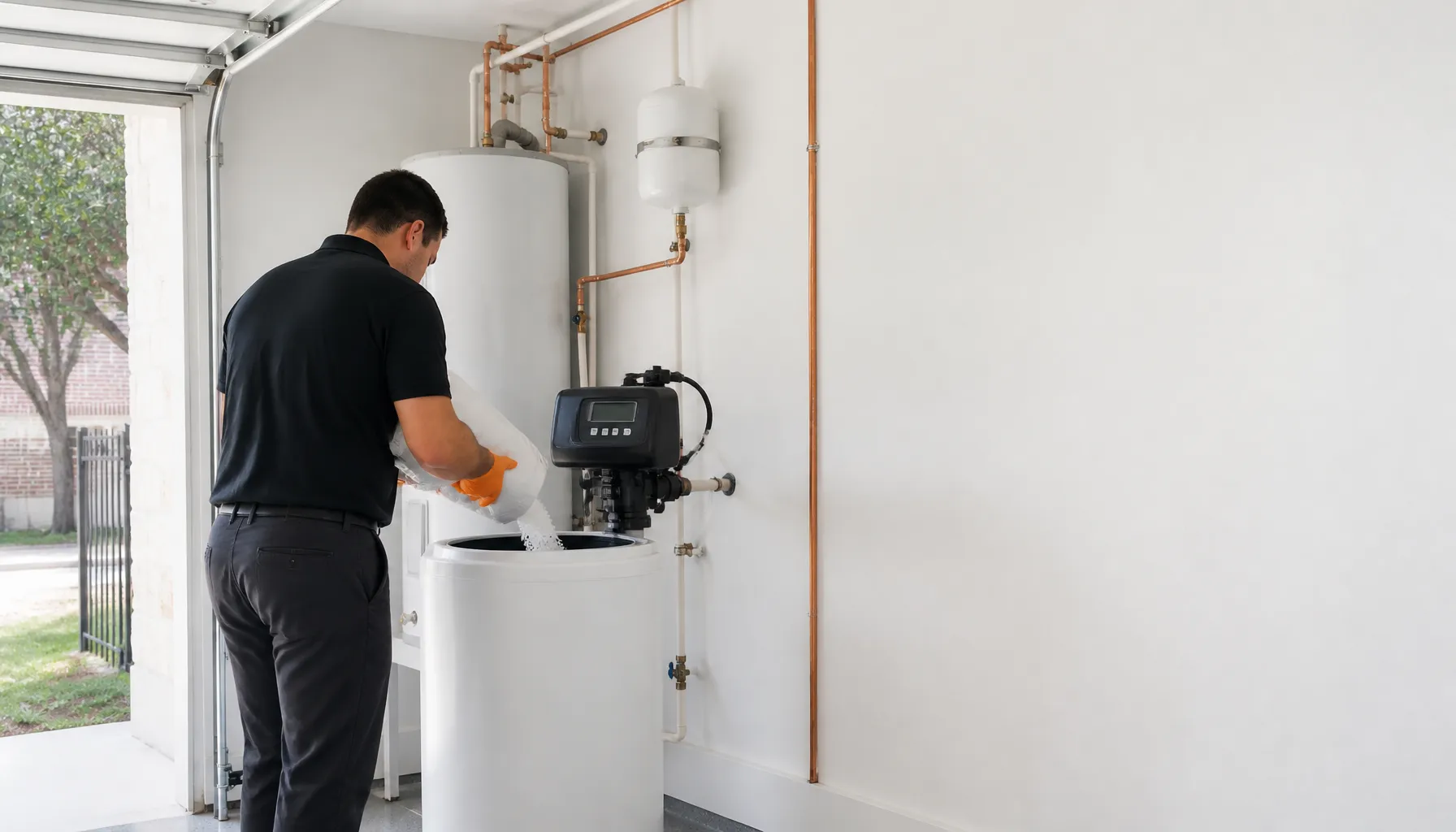
Calcium and magnesium left behind as the water dries.
Hard water dries cloudy on glass, even after a full cycle.
Scale settles in the tank and pops as the burner heats it.
Hill Country wells vary a lot. Size from a test, not a guess.
Pick your city
5.4 gpg
Moderate, WQA scale
Softener optional. Flush your water heater yearly.
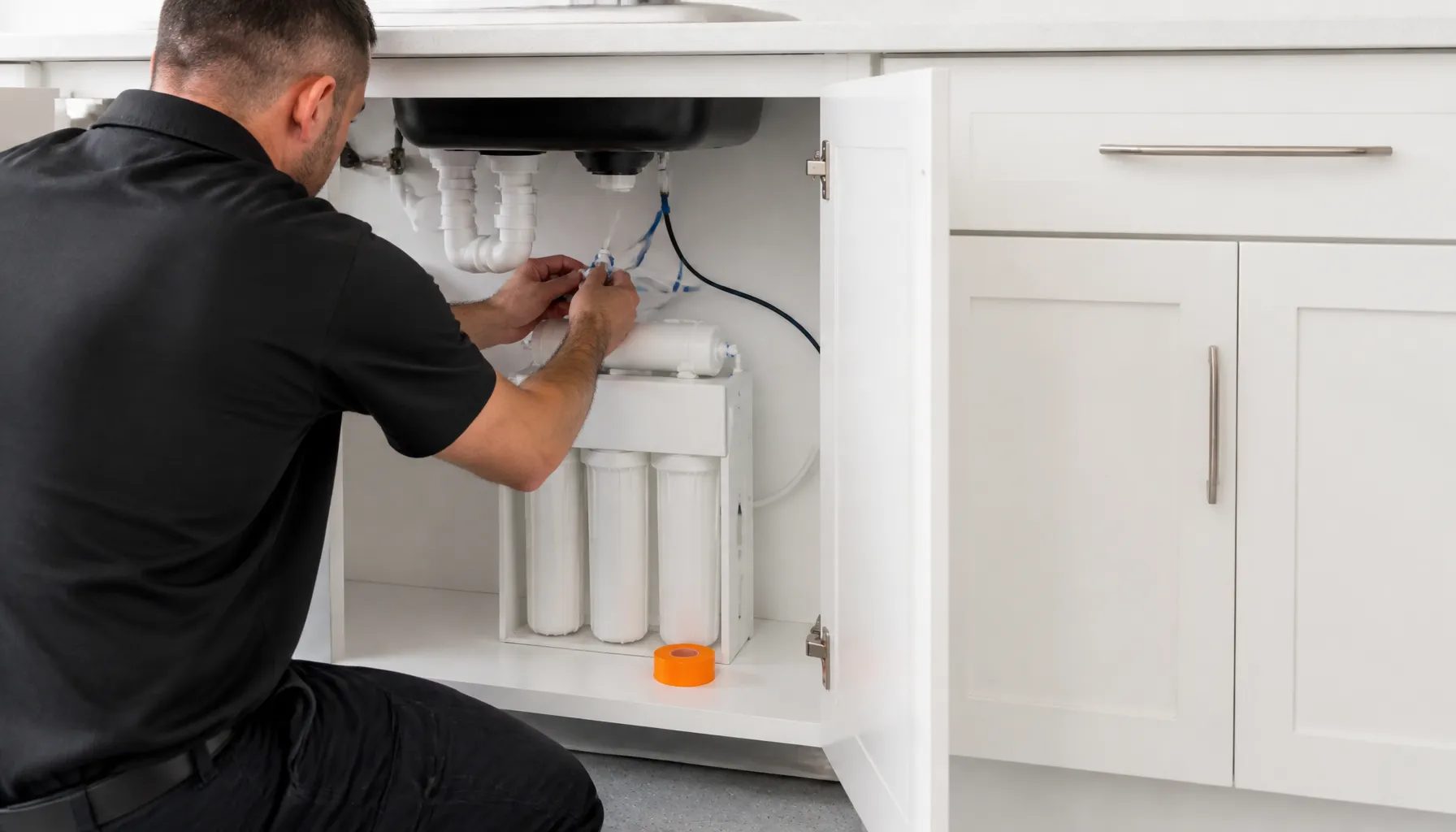
Carbon for chloramine taste, reverse osmosis at the sink.
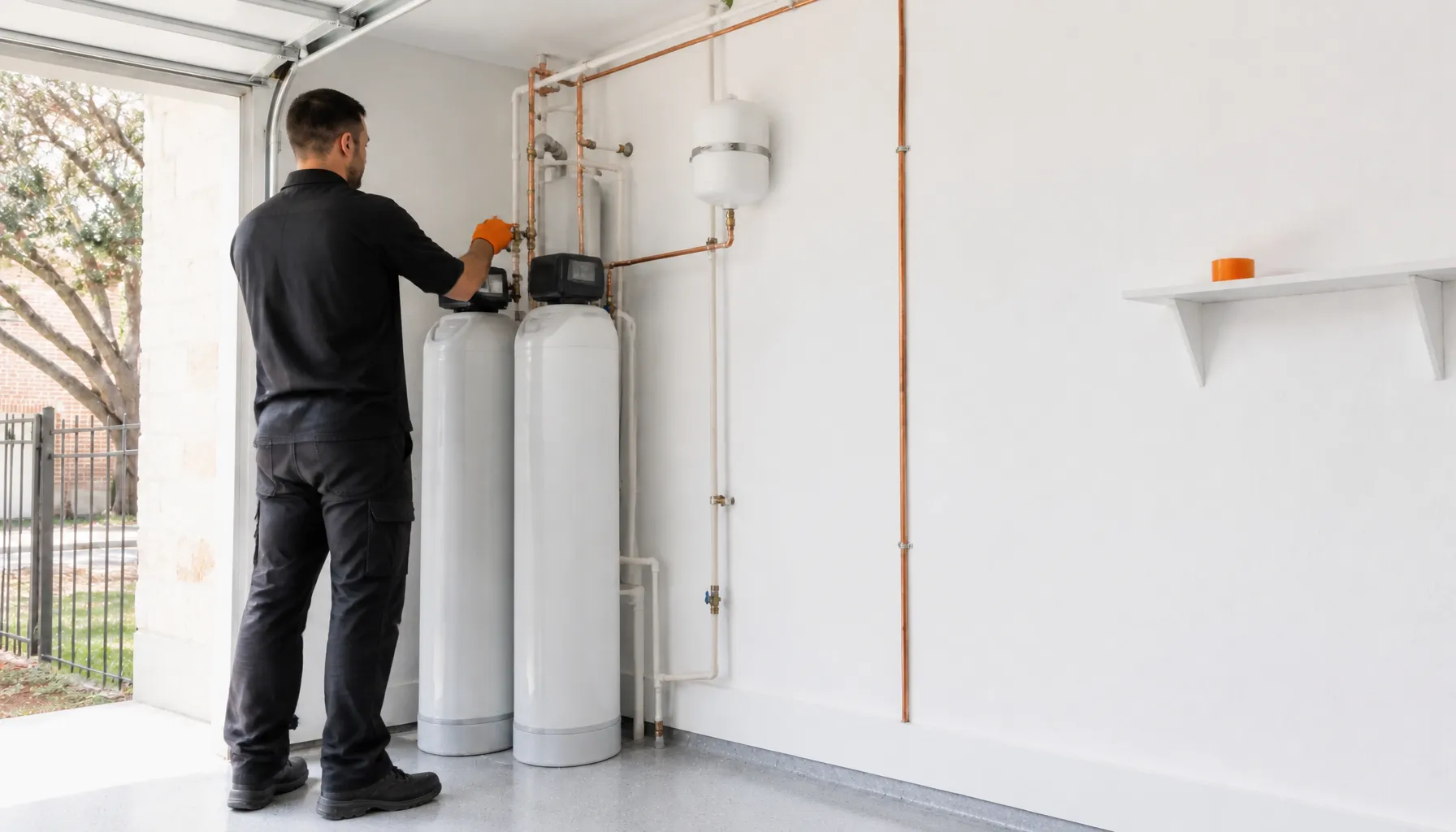
Still unsure? Call and ask a technician.
No. Austin disinfects with chloramine, and that needs a carbon filter, often a catalytic carbon filter. Softeners only remove hardness minerals.
From two numbers: your water's hardness in grains per gallon, from your city's report or a well test, and how much water the household uses. Together they set the capacity and how often it regenerates.
Installing water treatment equipment for a customer in Texas requires a TCEQ water treatment license or a plumbing license.